
By Orient-Tapis Prestige, Paris 7th · · 5 min read
Key points
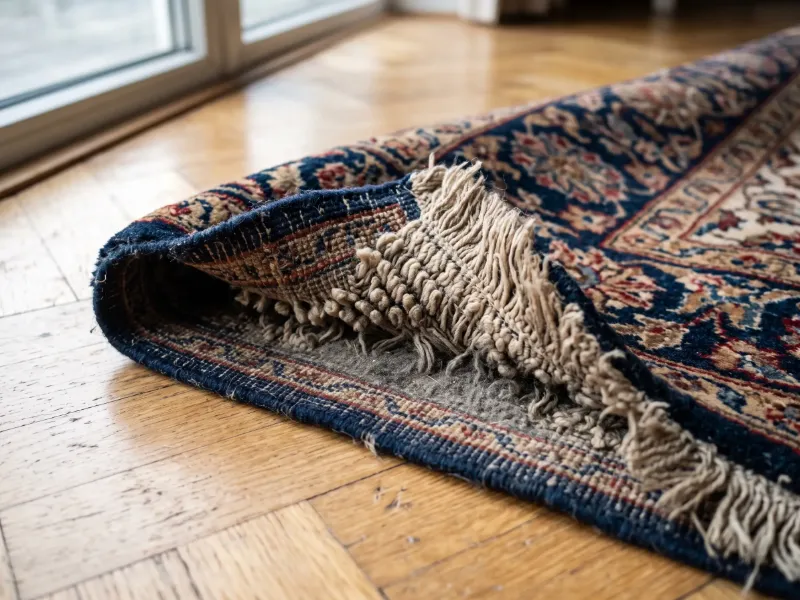
- Fold the rug with the pile facing out: a grey line at the base of the knots means deep-seated dirt.
- Compare an area that has been under furniture with a walkway: the difference shows what the dust has dulled.
- Before the holidays, allow some leeway: the workshop’s turnaround is given to you with the quote.
What the vacuum cleaner leaves behind
A vacuum cleaner looks after the surface. It picks up light dust, crumbs and hair. What it does not lift is the fine grit carried in on shoes, which slips between the knots and settles against the foundation. In a city like Paris, where you come home with the dust of pavements and building sites, this layer builds up quickly, especially in a hallway or a busy sitting room.
The grit is not only a question of looks. With every step it rubs against the base of the fibres and wears them from inside, long before the pile looks damaged on top. Add cooking grease, smoke from a fire or candles, and the film that warm air leaves all winter long. The rug slowly loses its colour, and the eye gets used to it.
Hence a few simple tests that need neither products nor water.
Six tests to try at home
1. The fold
Lift a corner and fold it back on itself with the pile facing outwards, like opening a book the wrong way. The pile parts and shows the base of the knots. A grey or beige line, duller than the colour of the design, means a deep deposit.
2. The tap on the back
With a corner still lifted, tap the back with the flat of your hand over a dark floor or a sheet of paper. If fine dust falls with every tap, the rug holds far more than you can see.
3. The comparison
Find an area that has long been under a sofa or a sideboard and compare it with the walkway. If the first is clearly brighter, part of the difference is dirt. Keep one reservation: daylight can also fade colours that are exposed, and washing does not correct that.
4. The touch
Run your flat hand along the pile, then against it. A clean pile is supple and springs back. A dirty one feels harsh, dry and sometimes slightly sticky, with tufts that stay flattened. That last sign often points to an old shampoo that was not rinsed out properly and now holds on to dirt.
5. The smell
Put your nose close to the pile, especially in the days after the heating comes back on. A smell of warm dust, stale air or cellar means the rug needs air and water.
6. The whites in the design
Look at the ivory or white parts of the pattern, and at the fringes. When they turn grey or yellow, the other colours are dulled to the same degree, even if it is less noticeable.
What the results tell you
These tests do not replace an inspection, but they give a reliable trend:
- no signs or just one: regular care is enough for now, with a vacuum cleaner without a rotating brush, along the pile, and turning the rug round from time to time to spread the wear;
- two or three signs: plan a wash in the coming months, ideally before the season when the room is used most;
- four signs or more: do not wait, the grit is already working at the base of the fibres.
A rug in a little-used room, such as a guest bedroom, can stay clean for a long time while still collecting fine dust; a rug in a walkway, by contrast, can show every sign within a single season. Repeat the tests once a year, in the same spot, so you can compare.
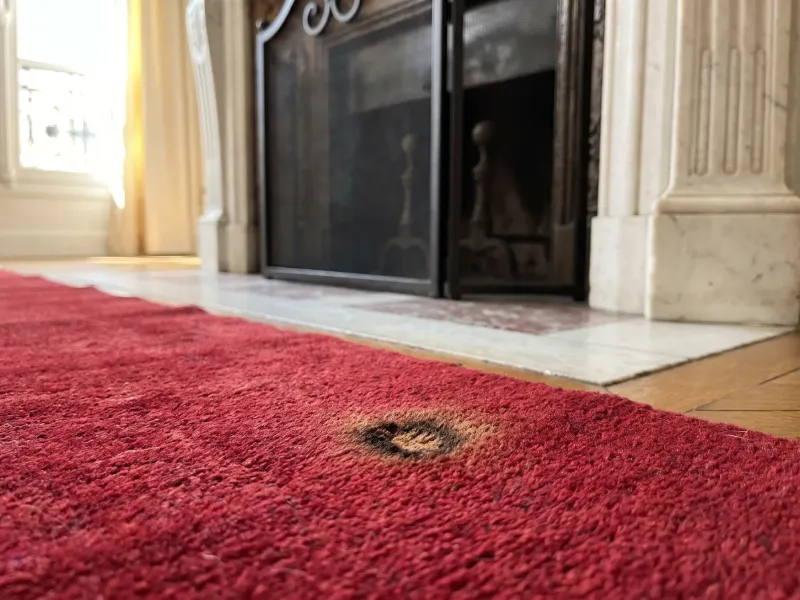
While you are at it, note anything else the tests revealed: an edge coming undone, a worn patch, a small hole, an old burn. Washing does not fix these, but it does reveal them, and it is better to mention them beforehand. For a mark left by an ember or a candle, see our guide on burns on a rug; for larger repairs, our restoration page explains what can be done.
Why a hand-knotted rug is washed in a workshop
A hand-knotted rug is not fitted carpet. It is washed flat with plenty of water, then rinsed until no product remains, wrung out without being twisted and dried flat. Each of these steps needs space, equipment and drying time that a flat simply does not offer. That is also why we do not wash rugs in your home.
Before any water goes on, every colour is tested on a corner to check that it holds. The method is then adapted to the material: wool, silk, a flatweave or a tapestry do not get the same product or the same treatment. The full process is described on our rug cleaning in Paris page, and you can see the machines and the washing floor on the page about our own workshop.
One last point matters to you: the rug is not sent to a subcontractor. It leaves your sitting room, goes through our workshop and comes back to you. If a colour has moved or a weakness has appeared during washing, you hear it from us.
Before the holidays: when to book and how to prepare the collection
Many requests come in when people are planning a dinner or the arrival of family. It is better to book early. The turnaround depends on the size, the material and the condition of the rug; you are told what it is when you receive the quote. If you do not want to leave the room bare in the meantime, ask us to lend you a rug.
The run-up to Christmas is also when rugs are under the most strain: more guests, more meals at the table, more candles, the heating on full. A rug washed in November starts that period clean; one washed in January starts the new year clean. Both make sense, as long as the date is chosen rather than suffered.
For the collection to go smoothly:
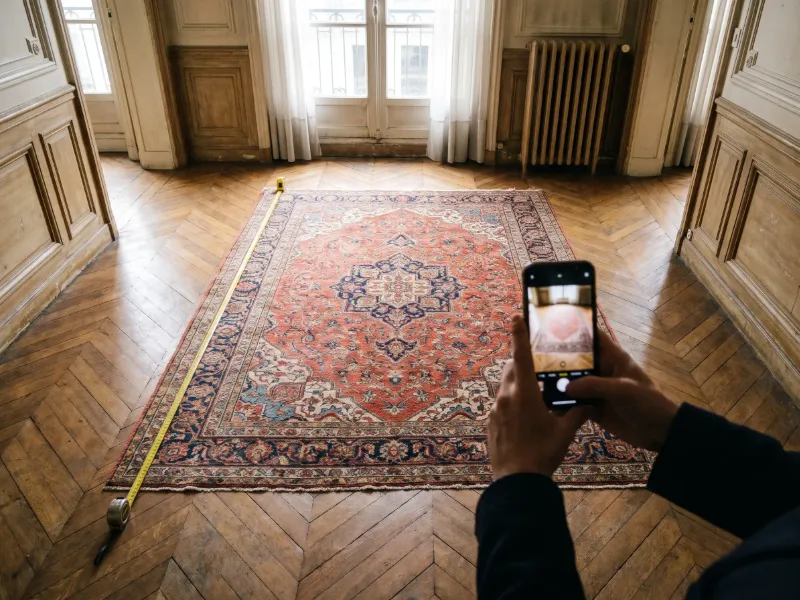
- send the measurements and one or two photos, taken as explained in our guide on photographing a rug;
- mention any stains, smells or repairs you know about, even old ones;
- clear heavy furniture off the rug, or tell us if it needs moving;
- tell us the floor, whether there is a lift, and how wide the staircase is if it is narrow: a large rolled rug does not fit everywhere.
For advice before deciding, call 07 49 23 76 50 or drop in at the shop, 51 rue de Babylone.